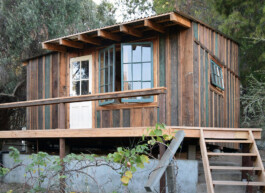
Murphy House
2016

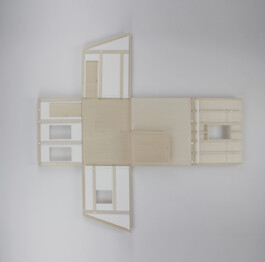
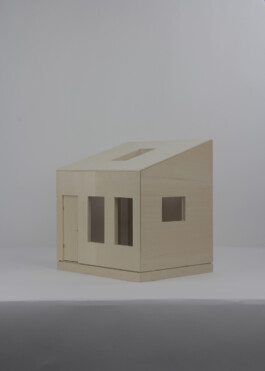
Model with One Wall Unrolled
Location: Echo Park
Client: Maria
First Office Team: Andrew Atwood, Anna Neimark, Brooke Hair, Jeff Marsch, Alex Spatzier


Murphy Bed Model, Closed and Open
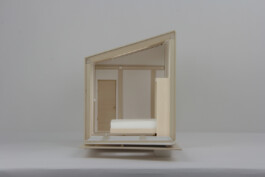
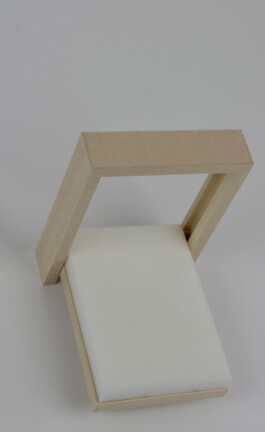
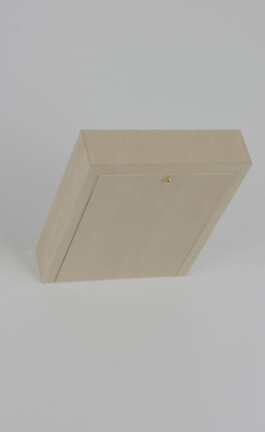
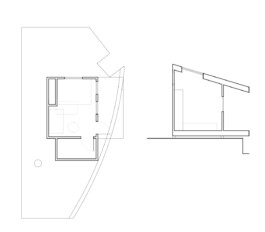
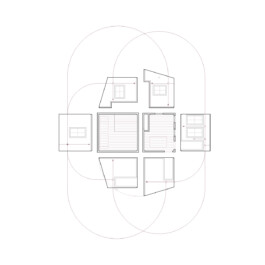
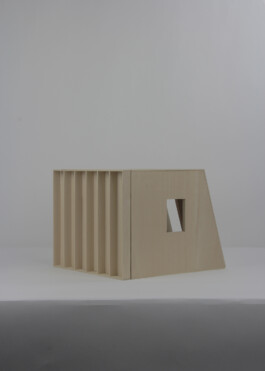
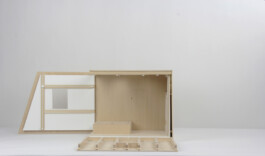
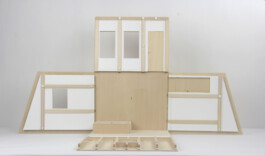
We have all heard the story of Louis XIV: first he built his bed, then the palace around the bed, then the Versailles gardens around the palace, and all of France around Versailles. Here is a similar experiment on a far smaller scale. Let’s call it the humble man’s home. The bed in this scenario is a Murphy Bed, the room is designed around it, then the house around the room. The Murphy Bed has a wonderful capacity to fold up vertically to save livable space during the daytime. Functionally, in this position it is put away and not in use. But technically, in its vertical orientation it disrupts our preconceived notion of the floor’s location. In fact, the Murphy Bed always produces two floors in a room, one horizontal and one vertical. And since this is the case, the room’s decorative and programmatic elements were designed in relationship to two floors, not one. The device that makes this argument possible is the developed room drawing. By unfolding all interior elevations of the house in relationship to the horizontal floor but designing them in relationship to the vertical floor, the newly folded volume presents several problems. The elements in a room that are normally singular and directional—such as entry, structure, relationship to the ground, direction of molding and conduit, and material finish—are doubled, turned, or folded out.

Murphy Bed Model, Closed and Open

Developed Interior Surface Drawings

Developed Interior Elevations Model

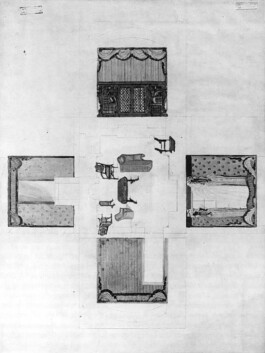
Furnishings for a small drawing room, Gillows and Co, 1822, discussed by Robin Evans in “The Developed Surface: An enquiry into the brief life of an eighteenth century drawing technique,” 9H: On Rigor, no 8 (1989)


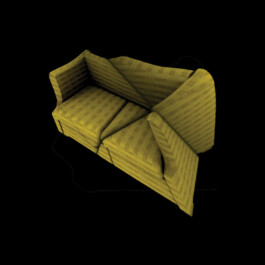
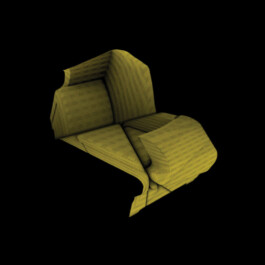
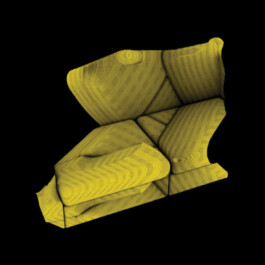
Couch on Couch Renderings: Loveseat, Armchair, Sofa

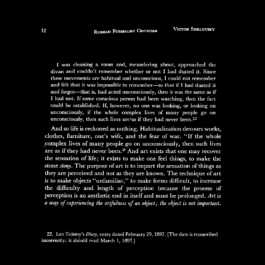
Victor Shklovsky, “Art as Technique,” 1917, in Lee T. Lemon and Marion J. Reis, Russian Formalist Criticism: Four Essays (Lincoln: University of Nebraska Press, 1965), p. 12


The Two Orientations of the One-Room House


Model with Two and Four Walls Unrolled


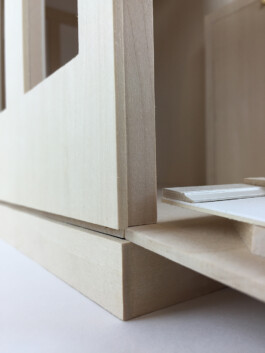
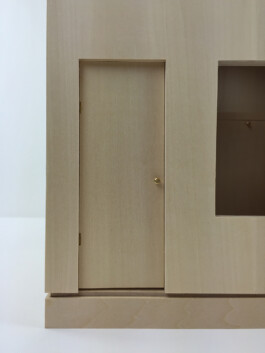
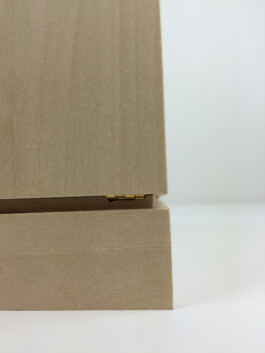
Model Details
The Developed Surface Interior of the Murphy House

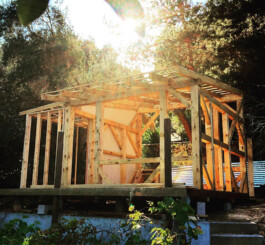
Under Construction

Murphy House in Echo Park, 2016
Site: Mr. Wren
First Office was founded in 2011 by Anna Neimark and Andrew Atwood to create a dialog between architectural practice and academic discourse. Their collaborative work spans buildings, exhibitions, and publications, all rooted in the belief that architecture is a form of cultural production.
The practice has engaged with leading institutions, including the MAK Center for Art and Architecture, the Chicago and Venice Biennials, MoMA PS1’s Young Architects Program, and the Architectural League of New York. The projects and essays of First Office have been recognized with awards and compiled in Nine Essays (Treatise Press, 2015), as well as in Andrew’s publication Not Interesting: On the Limits of Criticism in Architecture (Applied Research and Design, 2017).
Anna Neimark
Design Faculty and Visual Studies Coordinator, SCI-Arc
anna.neimark@gmail.com
Andrew Atwood
Licensed Architect and Associate Professor, UC Berkeley
w.andrew.atwood@gmail.com